
ACCOUNTABILITY LAB NEPAL
Accountability Lab Nepal marked its 10th anniversary recently by reflecting on the past decade and building on existing networks and efforts to strengthen democracy in the country. As Nepal held local and federal elections, ALN played a significant role in organizing and convening people. Youth engagement was a key part of this work – reflecting on the first five years of decentralization. We’ve made connections with a diverse group of leaders, inside and outside government, providing spaces for co-creation and collaborations in promoting accountability. In addition, our Integrity Innovation Lab is equipping young changemakers with knowledge, skills, and networks to push for greater climate justice
Our sector is reeling from the impacts of the United States Government’s aid freeze enacted on 24 January 2025. We are running a survey to gather evidence and document the impacts of the freeze on youth-led organizations in Nepal. If your organisation – or any that you know of – has been affected, help us build a clearer picture of the situation to drive collective action. The findings will be anonymised and foster solution-oriented dialogues, policy discussions and advocacy efforts for sustainability and resilience in the sector.
WHAT WE DO
LATEST NEWS
NEWS
September 7, 2026
LATEST PODCASTS
Nepal’s Democratic Scenario | Defending Democracy EP #1
What is democracy? Is it about institutions, procedures, or the people? Is Nepal driven by its democratic values and constitutional norms? In this episode, Hari Sharma shares his insights into what Democracy means for Nepal through his experiences of analyzing the political situation in Nepal for over 3 decades. Defending Democracy is a 4-episode podcast series on strengthening Nepal’s democracy against foreign influences.

Intergenerational Gender Equality
How can we improve the fight toward gender equality by reducing the gaps between generations? How is defining gender roles from an early age shaping inequalities in our societies? We talk about Nepali cultures – wedding rituals, period rites, mandatory gender roles, paid vs household works, etc, and dissect how our society has continuously contributed to inequality. The amazing writer and feminist, Archana Thapa, shares her experiences and stories on how we can slowly change the narrative and find solutions to gender equality issues in Nepal.
WHAT’S HAPPENING



How can a funder's exit be responsible and help build a resilient civil society?
Our Co-CEO, Cheri-Leigh Erasmus and Eszter Filippinyi of @TAICollab, explore this question in “Leaving with Care: Responsible Funder Exits.”
When a funder exits, the consequences can extend Read morebeyond
📣 Nominations are open for the Get Loud Award: Democracy Defenders!
Together with Kerry Washington and her production company, Simpson Street, the Elevate Prize Foundation is looking for organizations in the US and around the world working to protect, strengthen, and reimagine

Awarded every month to a community-based organization nominated on Instagram by you! GET LOCAL. GET ORGANIZED. GET LOUD. TOPIC OF THE MONTH Democracy...

What does shifting power look like in practice?
Carolyn Dallmann and Lior Ipp join Cheri-Leigh Erasmus on AccountabiliTea to explore innovative approaches to grantmaking.
🎧 Watch, listen or read: https://bit.ly/4d5BYyU
At this year’s UNGA, we joined the Ban Ki-moon Foundation, Civic Strength Partners and UNDP to convene leaders from civil society, philanthropy, and multilateral and development organizations. We met to shift the conversation about civil society’s future from diagnosis to
At this year’s UNGA, the Ban Ki-Moon Foundation, Accountability Lab, Civic Strength Partners, and UNDP convened leaders from civil society,...
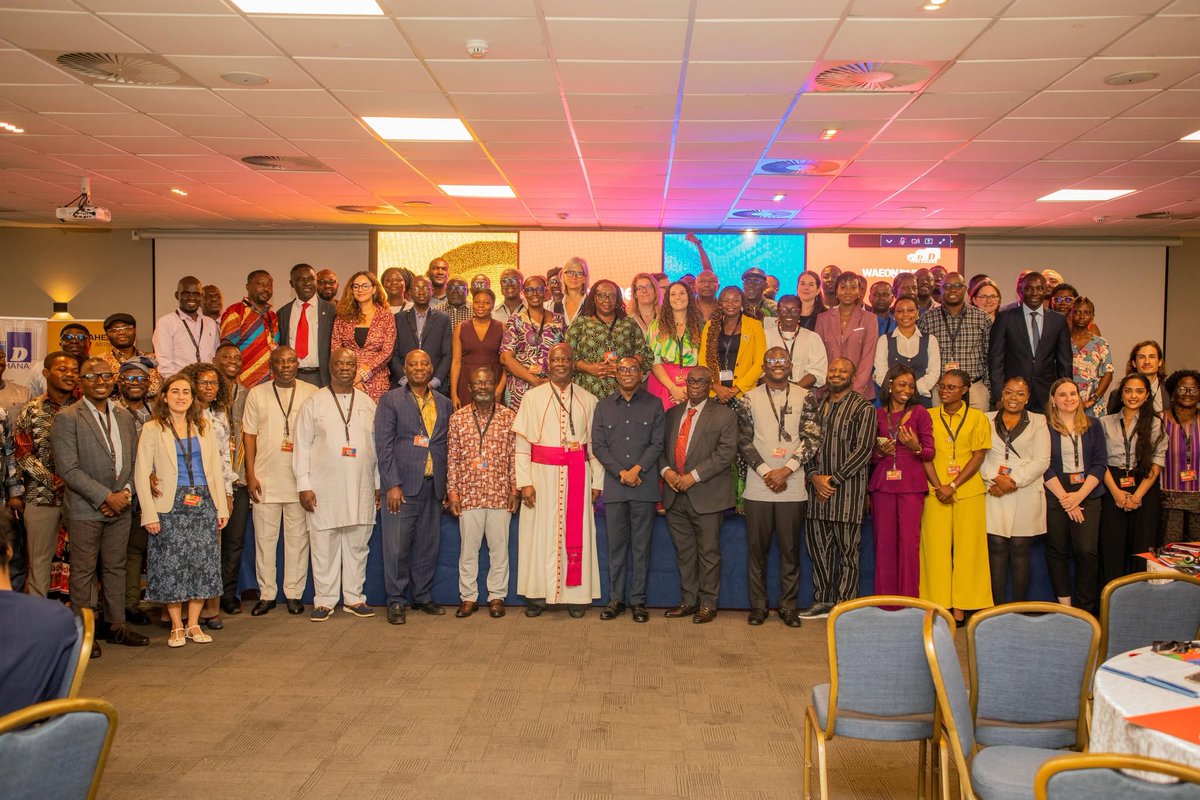
"When money can buy influence and technology can multiply it, how can we protect elections from these forces?"
At the 3rd Electoral Integrity in Africa Summit in Accra, Ghana, participants highlighted the urgent need to equip citizens to assess and question online content, find

Transparency and accountability depend on a civil society that can act independently.
@accountlabng is among 31 civil society organizations calling for the withdrawal of Nigeria’s proposed Foreign Aid (Regulation, Transparency and Disclosure) Bill, 2026, which seeks to regulate