
NEWS
April 21, 2026
IN BRIEF
Youth-Led Election Monitoring Initiative’s Post-Election Conversation with Youths Accountability Lab […]
SHARE
Youth-Led Election Monitoring Initiative’s
Post-Election Conversation with Youths
Accountability Lab Nepal, Kathmandu, 3rd April 2026
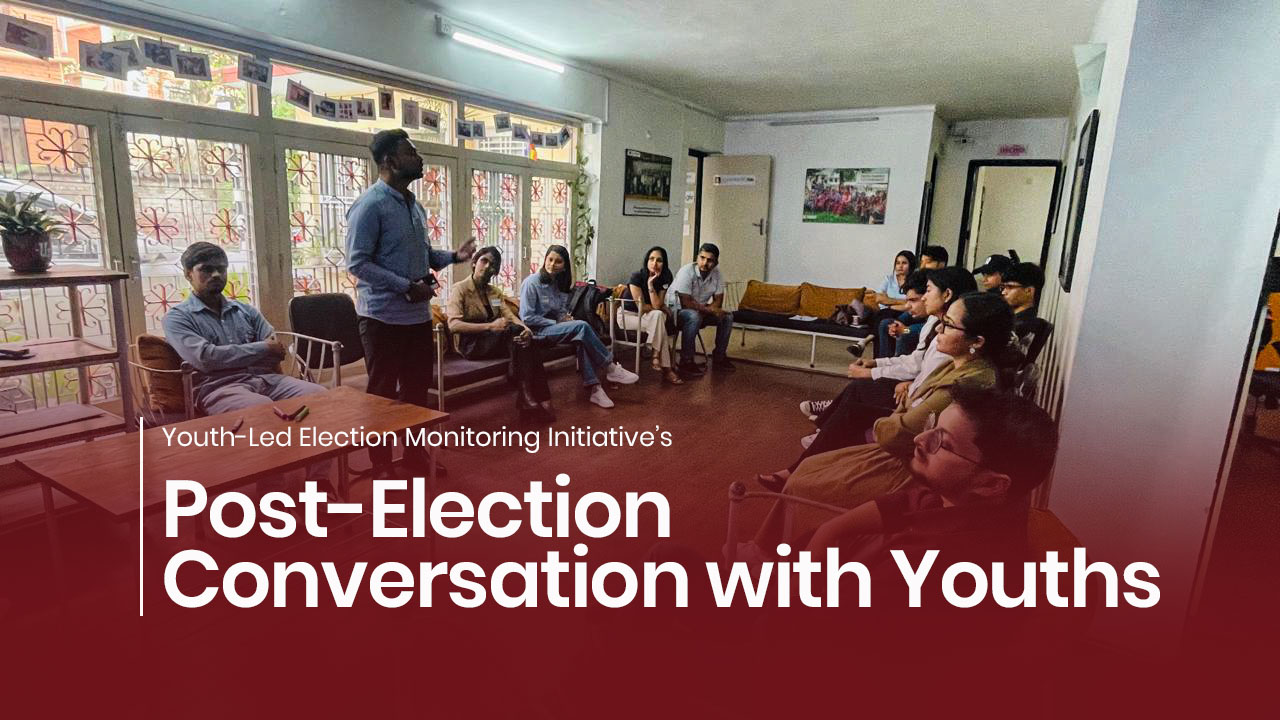
Following Nepal’s recent federal parliament election in March, Accountability lab Nepal (ALN) hosted an interactive youth dialogue titled ‘Votes and Voices: Youth in Conversation’ on 3rd April 2026 in Kathmandu.
This dialogue was part of our larger effort to promote youth participation in promoting free and fair elections and creating a platform for them to observe and experience the electoral process firsthand. We collaborated with the European Partnership for Democracy (EPD), with the support of the European Union (EU), to launch the ‘Youth-Led Election Monitoring’ initiative, through which we directly engaged 15 Nepali youths aged 20-34 across all 7 provinces throughout the election cycle as an observer and frontline civic activist. Through this initiative, we also supported domestic election observer organizations by strengthening their mandate, expertise, and networks to conduct observation activities during the election period.
Following the elections and the publication of results, we convened this dialogue to share and reflect on the experiences of youth election observers, including those mobilized by ALN, election partners, and others. The session also sought to gather broader perspectives from diverse young people, including first-time voters and Gen Z participants, while fostering a growing community of active youth committed to promoting electoral integrity. It further aimed to sustain youth participation beyond the election period, encouraging continued engagement in democratic processes and contributions to policy discourse. Convened after the recent electoral cycle, the conversation was not about turnout numbers or party victories. It was about what it felt like to participate, to observe, and to hope for change and where that hope met resistance.
- Youth participation is rising but not equally: Participants highlighted a clear shift in how youth participation in elections is increasing and diversifying. Young people are no longer only voters. They are:
- campaigning at local and national levels
- mobilizing voters in their communities
- observing electoral processes
- engaging in political discussion both online and offline.This reflects a positive change, showing that youth are no longer peripheral actors in elections; they are active participants. They are often at the forefront of electoral engagement, helping shape awareness, participation, and political conversation at the community level. At the same time, the youth’s role is still evolving and not yet fully institutionalized, meaning youth engagement remains more active during campaigns, voter mobilization, election observation, and political discussions. However, this engagement is often short-term and peaks during election periods. There are limited structures for sustaining youth participation beyond elections.Moreover, this engagement is still uneven. Participation is often concentrated among those with better access to networks, information, and resources, meaning not all young people are able to engage in the same way or with the same influence. For many, especially those from marginalized communities, participation is constrained before it even begins. Travel costs, limited connectivity, and lack of exposure to civic spaces quietly filter out voices that should be central to democratic life. The result is a familiar paradox: more youth are visible and engaged in elections than ever before, but not all youth are equally represented.
- Representation and women’s participation are expanding but remain unequal and often symbolic: Youth noted that representation of diverse groups, including women and marginalized communities, has become more visible in recent years. This reflects a positive shift toward broader inclusion in political spaces. However, participants emphasized that this inclusion is often limited in practice. Tokenistic candidate selection continues to restrict meaningful participation in decision-making within the newly formed government.Female participants highlighted that while opportunities for political engagement have increased, access remains uneven. Political spaces often favor elite or economically advantaged women, while women from marginalized communities remain underrepresented and excluded from meaningful discussions. Similar concerns were raised regarding caste, ethnic, and linguistic representation, where inclusion is frequently symbolic rather than substantive.
- Greater Access to Information but Growing Misinformation Risks: Participants highlighted both opportunity and risk in the current information environment. On one hand, social media has made political information more accessible than ever before, especially for young people who are able to follow, question, and engage in real time. On the other hand, the same space is shaped by misinformation and polarized narratives, which can distort public understanding of issues and candidates. The insight here is not only about misinformation but also about how central digital platforms have become in shaping political awareness. One participant, an undergraduate student, described her pre-election conversations with friends at her university.
“They had limited understanding of the voting system. Although they were eligible voters, they seemed unwilling to engage with or learn about the election system. Their perceptions of candidates were also inconsistent and often shifted in response to recurring narratives on social media.”
- A generation engaged but still constrained: What emerges from these reflections is not disillusionment but realism. Young people in Nepal are not disengaged from democracy. They are participating, questioning, and organizing. They are pushing for change. Across the election cycle, youth were deeply involved. They worked on campaigns, mobilized voters, observed polling processes, and facilitated discussions in their communities. But their influence is shaped and often limited by structural inequalities, weak information systems, and institutional barriers that have yet to evolve at the same pace.
- Personality still outweighs policy: Despite increased awareness and engagement, electoral outcomes continue to be shaped heavily by personality-driven politics. Issue-based discussions are growing, especially among youth but they are not yet dominant. Charisma, networks, and legacy still carry more weight than policy positions or reform agendas.
- Electoral Integrity : Participants identified several structural gaps affecting the fairness and credibility of elections. These include accessibility challenges for persons with disabilities (PWDs), weak voter privacy protections, late voter education efforts, limited transparency in party manifestos, and concerns over narrative-driven media reporting.
Electoral Reform Priorities for Youths :
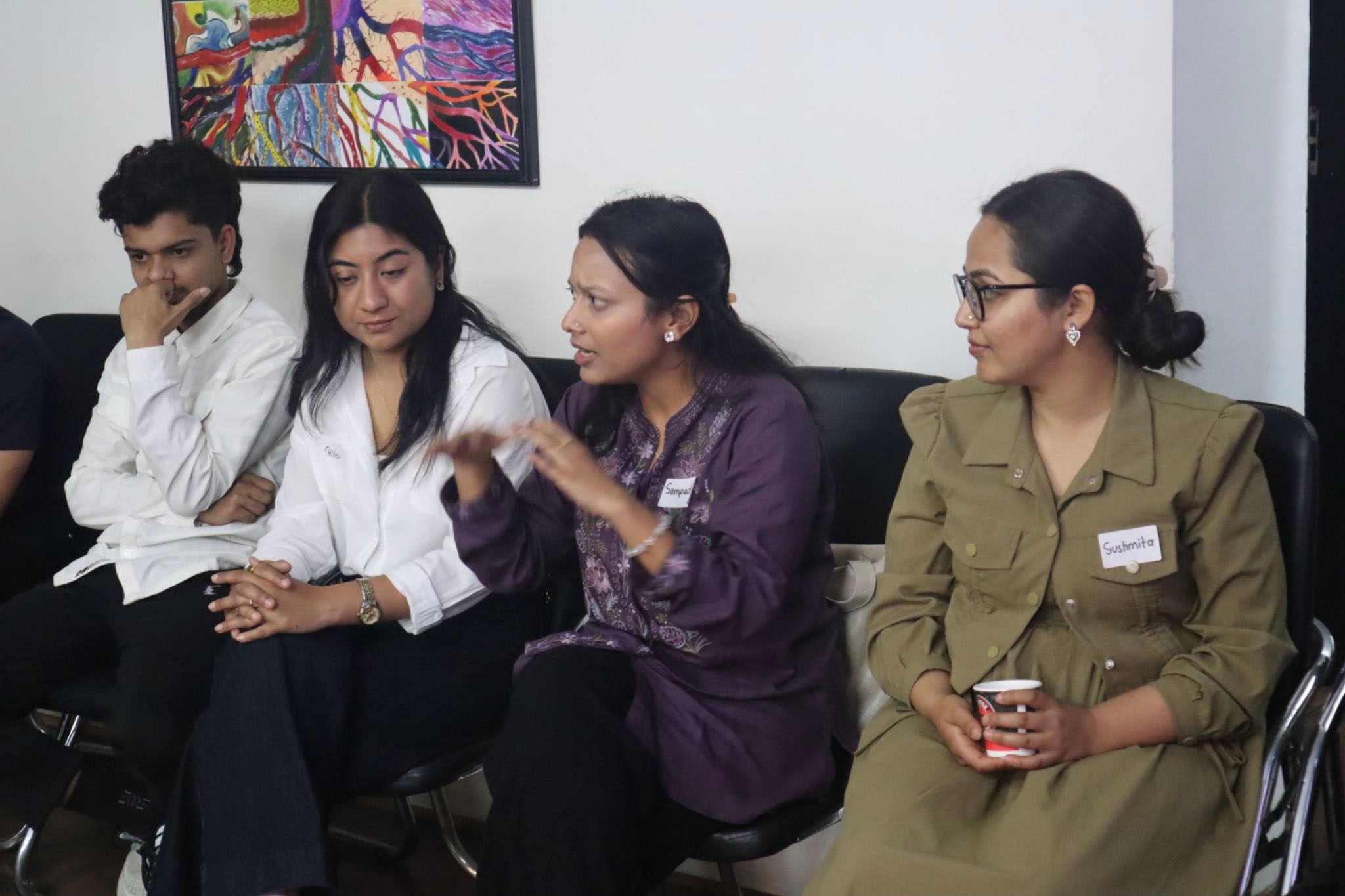
The participating youths emphasized several priority areas for improving the quality and inclusiveness of future elections. These include:
- Enhance the overall inclusiveness of the electoral system by removing barriers to participation, improving access to information, and ensuring fair conditions for all voters. Youth highlighted that these challenges are especially difficult for first-time and young voters, who are often navigating the process without much guidance. There is a clear need to make electoral systems more accessible for persons with disabilities (PWDs), by ensuring polling stations are easy to access and that everyone can vote with privacy and dignity.
- Strengthen civic awareness and voter education so citizens are informed and engaged beyond election periods, not only during campaigns. Youth participants highlighted that voter education often does not reach young and first-time voters early enough to shape informed participation. Also, start voter education earlier and sustain it throughout the cycle as current outreach efforts often begin too close to election day to meaningfully inform voters. Moreover, voter education should not be limited to the mechanics of voting, such as how to cast a vote, but should also empower citizens with knowledge of their rights and the broader democratic processes that shape governance.
- Build more accountable and transparent information ecosystems by ensuring media neutrality, fact-based reporting, and reducing narrative-driven distortion of electoral information. Young participants particularly noted how social media environments strongly shape youth political perceptions, making media accountability especially critical for young voters.
- Improve transparency and ensure timely processes within political parties particularly through the early publication of manifestos and clear public commitments for scrutiny before elections. Youth emphasized that late manifesto releases limit their ability to critically evaluate parties and make informed choices, especially among engaged young and student voters.
Way Forward:
-
- Rethink youth political participation in the changing context : The March election has sparked a wider national conversation on the mainstream political participation of youth. Traditionally, the pathway for youth engagement in politics was largely seen coming through party youth wings or student unions, or trade unions, with their electoral role mostly limited to campaigning for their senior party candidates. However, in the recent election, we observed a surge of youth candidates, many of whom were first time contesting the election, or had joined new parties, with non-partisan backgrounds and many with no history of involvement in student unions or party youth wings. Today, 55 elected parliament members, under 30 years of age, have won the election and are now serving in key roles in the government including PM Balendra Shah. This suggests that there could be new pathways, platforms, and forms of engagement for young people seeking to participate in politics beyond the student unions.Additionally, at the time of writing this report, the new government has taken a strong stance on banning partisan student unions in Nepali universities. This will create a significant shift in how youth political participation is understood and practiced in Nepal. A key question, however, is whether different and newer pathways for youth political participation can be sustained over time. Because, this will require support mechanisms both within and outside party structures that encourage leadership development, representation, and meaningful participation of youth in decision-making processes. This is where CSOs, donors and activists can play an important role in collectively creating that support mechanisms that foster innovative pathways for youth political participation.Through the ‘Youth-Led Election Monitoring’ initiative, Accountability Lab Nepal aimed to create a platform for young people from diverse backgrounds including journalists, community actors, and students to gain firsthand exposure to the electoral process. The initiative aimed not only to deepen their understanding of elections but also to create opportunities for youth who wish to engage in politics while remaining neutral and vigilant. By connecting their on-the-ground experiences to continued engagement such as through this post-election dialogues, this initiative encouraged sustained youth involvement beyond the electoral moment and into broader democratic processes and election integrity.
- Prioritize anti-corruption and good governance reforms : Anti-corruption and governance reform were among the most prominent demands and expectations of youths throughout the Gen-Z movement and the election cycle. Youths have high hopes in the new government for better governance and institutional reform.The new government’s 100-point framework places considerable emphasis on digitization as a tool to reduce inefficiencies, simplify service delivery, and limit opportunities for corruption. There have also been visible efforts toward depoliticizing institutions by shifting from politically influenced appointments toward more merit-based selections. Public accountability measures, such as the removal of a minister over allegations of favoritism in appointments, shows the clear intent and has further reinforced reform expectations. While young people support the reform measures, their concern also lies in whether these ambitions confront existing challenges, including the digital divide, weak technological infrastructure, and deeply entrenched political interests within institutions.To ensure better electoral governance in the future elections, the new government must prioritize what the youth’s reform priorities are which include electoral integrity through stronger voter education, media accountability, electoral accessibility, and scrutiny of political commitments alongside the reform beyond the election process.
- Build consensus and trust : The country remains deeply polarized across narratives such as ‘young versus old’, ‘traditional parties versus new or alternative parties’, and ‘ideology versus nation-building’. Bridging such division is necessary if to establish a culture of open dialogues, and constructive engagement among dividing lines. Such initiative will contribute towards trust and confidence in non-adversarial debate in democratic manner, thus the institutions remain vibrant in the long run. A broader dialogue that is inclusive and meaningful will ensure youth participation in decision-making processes. Governance reform should therefore not be treated solely as an administrative agenda, but as a participatory process that actively engages citizens, bridges divides, and builds long-term democratic consensus.