
NEWS
November 27, 2025
IN BRIEF
Will elections take place as planned on March 5, 2026? […]
SHARE
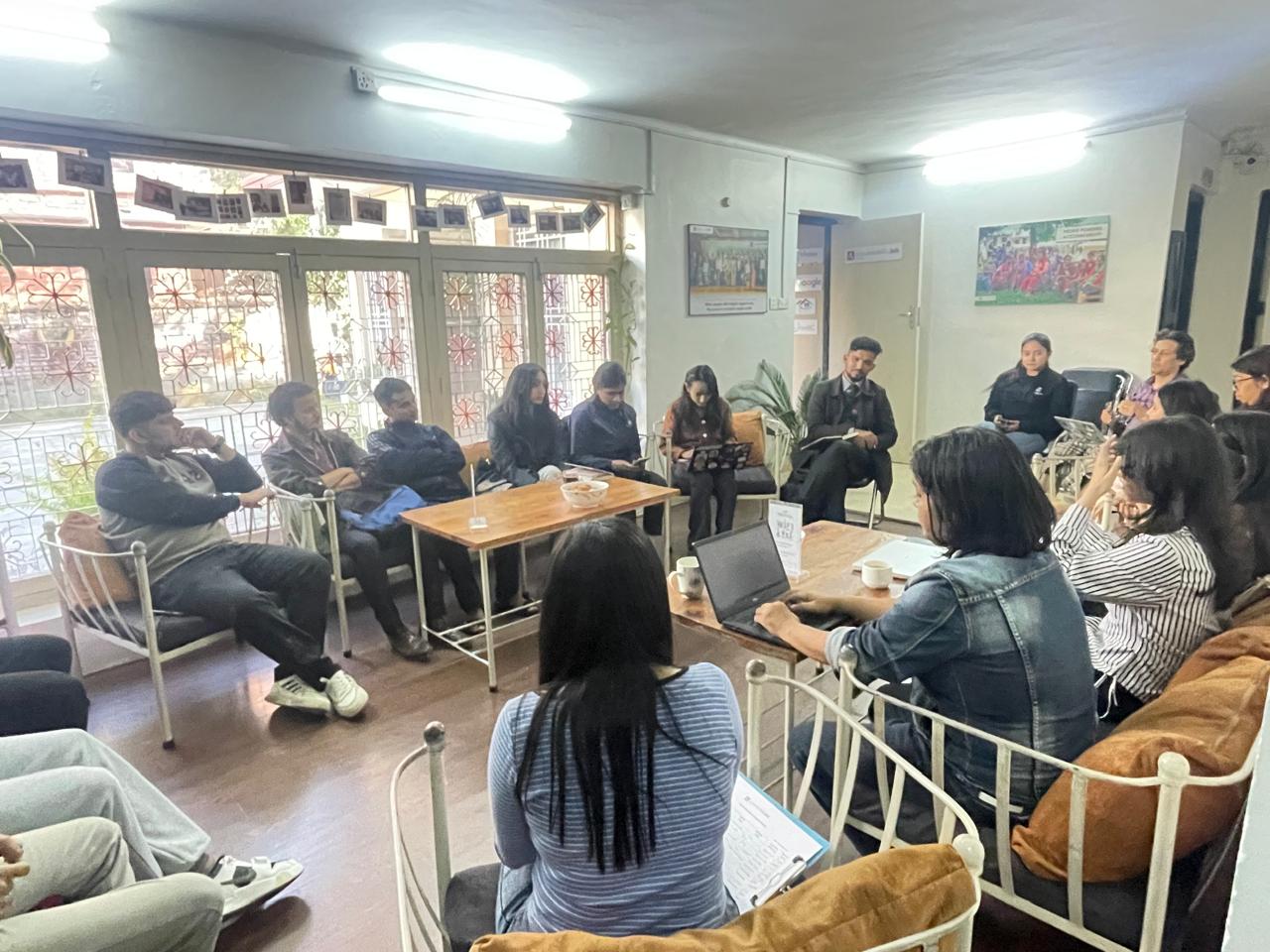
Will elections take place as planned on March 5, 2026? Will politics get further polarized and the situation further deteriorate? What would be the results of the election? What if the election is not held on time? These questions emerged as a pressing concern during the “Interaction with Young Changemakers” held by Accountability Lab Nepal in light of the Gen-Z uprising and recent development in Nepal. The discussion event brought together young people from diverse backgrounds including students, rights activists, lawyers, aspiring leaders, etc and offered insight into the perspectives of young people regarding the current political landscape and transitional government. The discussion provided space to articulate their thoughts, concerns, and engage in open dialogue.
Here are the major highlights of the discussion:
Uncertainty around conducting the election
The major fear amongst most of the participants was that elections may not take place in the stated time for various reasons i) fractions among the Gen Z representatives and their standing regarding election, ii) lack of support from the major political parties iii) limited time and resources in ensuring fair election process and more. Participants raised concerns over lack of civic preparedness for the election, as only around 90,000 new voters had registered when this conversation took place. Missing registration will mean the youth voices from the protests will not be translated into governance and legislation. The failure to conduct timely elections could mean failing to translate youth voices from the protests into governance and legislation; reinstating of the dissolved parliament, security threats to the Gen Z representative, more instability and much such spiraling that is yet to be fathomed.
Thus, they were keen to discuss the role of the Supreme Court (SC) and how they will process this change of government. There is a significant number of writs filed calling the current government as unconstitutional and demanding to reinstate the parliament. Without any significant instruction from the SC at the moment, one can anticipate their prominent role in the case where the interim government fails to conduct free and fair elections within the set dates or during or for the extension.
Expected reform within the Political Parties
The Gen Z revolution in Nepal calls for the new era of youth leadership, especially of those who are untainted by corruption. While election is one of the ways to bring the new and deserving leadership at the front, the expectation is also from the political party. To materialize the change from the Gen Z revolution it requires democratization within the political parties. The youth expressed how they were particularly interested in the conversations within political parties, one between the party leaders and student wings, on how they perceived the Gen Z movement, their plan on new leadership and accountability and how are they planning to contribute to the reforms and elections? Such dialogues are necessary to revise the system within the political party that only favors the “strongman culture” and paves the way for the certain selected leaders. It’s high time that parties create the space for the young leaders if they are to internalize the essence of the movement.
Additionally, it is necessary that the internal dialogues within political parties are transparent and accessible to the masses. This shall help in breaking the narrative of common people, “all parties and their members are corrupt” which are based on the certain representative figures and their corrupt syndicate. Failure to have such changes within the political party would be dishonest towards honest ideological party workers who have been socio-politically active and work tirelessly in the ecosystem of the party and will only lead to bringing back the same old political order which was not the vision of the revolution.
Pathways for the new and aspiring leaders
With the election approaching near each passing day, newer political parties and also the populist leaders are sprouting with considerable support from the people. While the older political parties seem more likely to bring their old representatives back, the hope is on the new political parties and aspiring young leaders. However, it is difficult especially for the young people to formally engage in nation building through active engagement in politics. The financial burden for election campaigning is not easy and requires a lot of funds. Inadequate financial backup can impact on the contest. Political parties have the practice of endorsing candidates based on their funds for election campaigns. Financing culture thus needs to be improved with the strict laws to make campaign financing transparent in order to provide space for diligent and deserving folk.
On the other hand, the young people are hopeful, having learned from the successful campaign of New York’s mayor-elect, where Zohran Mamdani effectively used digital media platforms for disseminating his vision and raising campaign finance.
Beyond voter registration and election dates
The new faces don’t necessarily equate to sound policy or reform. Citizens have a crucial role in questioning and scrutinizing the vision, politics, and proposed policies of the contesting parties. Voters should prepare questions to assess candidates’ intentions, reasoning, and depth knowledge. Instead of boycotting politics and political parties we should engage them, holding them accountable and ensuring they fully grasp their responsibilities and essence of the public mandate.
Currently, there lacks the platform for the necessary discussion between the political parties and citizens. Usually the interaction during the campaign is short and can be intimidating making it difficult for citizens to confront or question candidates, especially when the candidates are surrounded with hundreds of their cadres during campaigns. Youths demand open and safe platforms for interaction with their candidates so as to make informed decisions based on issues and vision.
Police and Security reforms and capacity building.
 Amid all the discussions around the elections and the reforms one has to reflect back and also consider reforms required within the Nepal Police. The way the Nepal Police has handled the situation during the protest is totally unlawful. Be it the Gen Z movement or the pro-monarch movements during March, the police have resorted to violence leading to killings as the crowd control method rather than a well thought preparedness and plans.
Additionally, like any other public institutions, Nepal police is also affected by systemic corruption. Practices such as bribe-for-promotion, bribe-for-transfer, nepotism and favoritism have weakened the system from within. These issues not only obstruct meaningful reform but also erode morale among officers. Inadequate salaries and a system where career advancement often requires bribes further incentivize corruption, creating a cycle that prevents the institution from evolving into a more accountable and professional body.
The discussion primarily centered on the upcoming election and the emerging leadership. The youth have a pivotal role in ensuring the movement they spearheaded achieves its goals. While we form such conversations it is also necessary that we incorporate a broader perspective, regional and global contexts. As one of the participants highlighted, declining youth voter turnout as the global issue and suggested that multiparty democracy and the current political system must adapt and align with changing PESTLE (Political, Economical, Social, Technological, Legal, and Environmental) scenarios. A newly formed government should embrace this shifting landscape and keep its approach locally rooted rather than influenced. We should derive the lessons from countries like Bangladesh, which have undergone similar revolutionary processes and share geographical, cultural, and behavioral similarities. By learning from these experiences, Nepal can craft a system that is both progressive and locally relevant.